Quality Control for Durable Grinding Media
Long service life is not achieved by hardness alone. Reliable grinding balls require balanced chemistry, heat treatment, impact resistance, dimensional control and consistent batch documentation.
Hardness, toughness and wear must work together
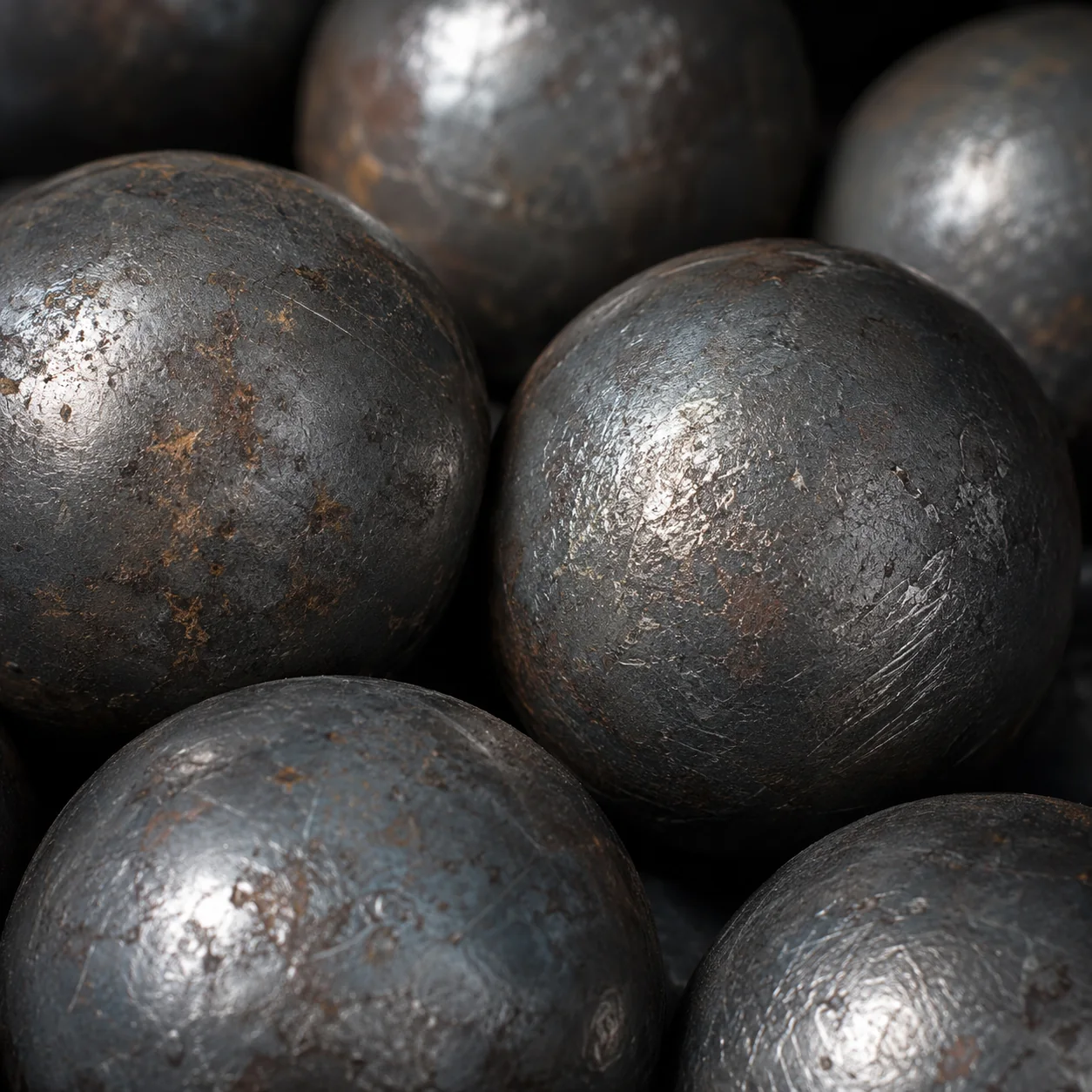
Grinding balls that are too soft can wear quickly. Grinding balls that are too brittle can crack or break under impact. The best specification balances wear resistance with reliable impact behavior for the actual mill duty.
- Consistent surface and core hardness.
- Controlled alloy chemistry for the application.
- Heat treatment designed for service conditions.
- Low breakage tendency under repeated impact.
- Packaging and batch traceability when required.
What buyers should compare before ordering
A professional grinding ball inquiry should compare more than diameter and price. These parameters influence the real total cost of grinding.
Chemical composition
Material chemistry affects hardenability, wear behavior, toughness and resistance to cracking under repeated mill impacts.
Hardness profile
Stable hardness through the ball reduces unexpected performance differences between batches and sizes.
Impact resistance
Impact toughness helps prevent premature breakage, especially in large mills or high-energy grinding environments.
Wear rate in service
Actual cost should be evaluated per tonne of material processed, not only per tonne of grinding balls purchased.
Documentation
Technical data sheets, batch information and agreed inspection criteria help industrial buyers manage procurement risk.
| Quality factor | Why it matters | Buyer question |
|---|---|---|
| Diameter tolerance | Supports stable charge composition | Which size range and tolerance can be supplied? |
| Surface condition | Reduces obvious handling or casting/forging defects | Is visual inspection part of batch control? |
| Hardness | Influences wear resistance and service life | What hardness range is recommended for this mill? |
| Breakage resistance | Prevents operational issues and media loss | Is the media suitable for high impact duty? |
| Packaging | Improves logistics and storage on site | Bulk bags, drums, crates or custom packaging? |
Common questions about grinding balls
Clear answers for buyers comparing grinding media specifications, product types and supply requirements.
What are grinding balls used for?
Grinding balls are used as grinding media inside ball mills to reduce the size of ores, clinker, minerals and other raw materials through impact and abrasion.
Which industries use steel grinding balls?
Steel grinding balls are commonly used in mining, mineral processing, cement production, power generation, chemical processing and other heavy industries using ball mills.
Which information is needed for a quote?
Useful information includes application, mill type and size, required ball diameter, target hardness, annual consumption, delivery destination and any technical standard required by the buyer.
Can grinding balls be supplied for European industrial plants?
GrindingBalls.at is positioned for inquiries from Austria and wider European industrial buyers who need grinding media for ball mill operations.